Let me guess:
You’ve seen those crazy YouTube videos of people pulling safes, guns, and bicycles out of rivers with nothing but a magnet and a rope.
And now you’re thinking: “I want to try that!”
Well, you’re in the right place. In this guide, as a professional fishing magnet supplier, I’ll show you exactly how to use a fishing magnet to find hidden treasures in your local waterways.
(In fact, I used these exact techniques to pull over 200 pounds of metal objects from a single lake last summer.)
Vamos a sumergirnos.
Why Magnet Fishing Is Exploding in Popularity
Check this out:
Google searches for “magnet fishing” have increased by 647% over the last 5 years.
¿Por qué?
Three main reasons:
- Low barrier to entry – You can get started for under $50
- Guaranteed finds – Unlike metal detecting, you’ll rarely go home empty-handed
- Environmental impact – You’re literally cleaning up waterways while having fun
Plus, there’s the mystery factor.
Every time you feel that “thud” on your rope, you have no idea what’s coming up. Could be a rusty nail. Could be a vintage motorcycle.
(True story: A guy in the UK found a motorcycle worth $3,000. Not bad for a hobby that costs less than a tank of gas to start.)
Essential Gear You Need
Before we get into techniques, let’s cover the gear.
You only need 5 things to get started:
1. The Right Magnet
No todos los imanes son iguales.
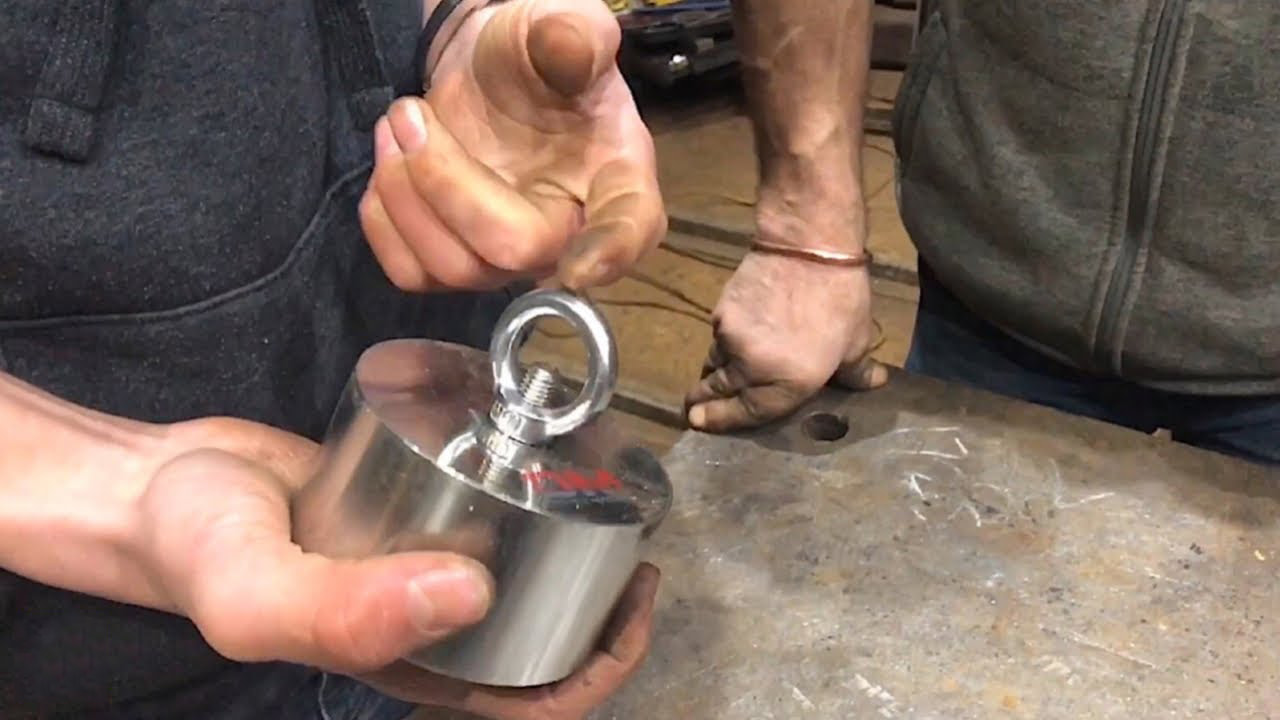
You want a neodymium magnet with at least 500 pounds of pull force. Anything less and you’ll miss out on bigger finds.
Consejo profesional: Start with a single-sided magnet if you’re fishing from bridges or piers. They concentrate all their power on one face, making them perfect for vertical drops.
2. Quality Rope
Your rope is your lifeline to your magnet (literally).
Go with:
- 6-10mm thickness
- Nylon or polyethylene material
- At least 65 feet long (100+ feet for high bridges)
Skip the hardware store paracord. It’s not designed for the constant wear and tear of magnet fishing.
3. Cut-Resistant Gloves
This isn’t optional.
You’ll be pulling up rusty metal, fishing hooks, and sharp edges. One wrong move without gloves and you’ll be making a trip to the emergency room.
I learned this the hard way when a rusty knife blade sliced through my regular work gloves. Now I only use Level 5 cut-resistant gloves.
4. Carabiner
A locking carabiner makes it easy to swap magnets or attach a grappling hook when needed.
Make sure it’s rated for at least the same weight as your magnet’s pull force.
5. Storage Container
A 5-gallon bucket works perfectly for storing your finds and gear.
Bonus tip: Bring a small Tupperware container specifically for fishing hooks and lures. Trust me, you don’t want those mixed in with everything else.
How to Use a Fishing Magnet: Step-by-Step
Here’s exactly how to magnet fish like a pro:
Step 1: Secure Your Magnet
First things first:
Apply threadlocker (like Loctite) to your magnet’s eyebolt. This prevents it from unscrewing underwater.
Then tie your rope using a Palomar knot:
- Double up your rope
- Thread it through the eyebolt
- Tie a loose overhand knot
- Slip the magnet through the loop
- Pull tight from both ends
This knot maintains 95% of your rope’s strength. That’s crucial when you’re pulling heavy objects.
Step 2: Choose Your Casting Method
There are two main techniques:
The Drop (Best for bridges and piers):
- Lower your magnet straight down
- Let it hit bottom
- Walk slowly along the edge
- Keep the magnet flat against the bottom
The Cast and Drag (Best for shorelines):
- Throw the magnet out as far as possible
- Let it sink completely
- Pull back in slow, steady increments
- Pause every few feet to let the magnet “grab”
Step 3: The Retrieval
Feel resistance? You’ve got something.
Here’s the key:
Pull slowly and steadily. No jerking motions.
Why? Rusty metal can break free if you yank too hard. Plus, whatever you’ve found might be stuck in mud or wedged between rocks.
When your find reaches the surface, grab the object itself (not just the rope). This prevents it from falling back in.
Step 4: Clean Your Magnet
Small metal shavings and “magnetic sand” will coat your magnet after each use.
Clean it off regularly or you’ll lose pulling power.
I use a plastic putty knife to scrape off the debris. Takes 30 seconds and keeps your magnet at full strength.
Advanced Techniques That Actually Work
Once you’ve mastered the basics, try these pro techniques:
The Grid System
This works great on fishing piers:
- Mentally divide the pier into 3-foot sections
- Make 3-4 sweeps per section
- Start close to the pier, move out one foot per sweep
- Overlap sections by about 6 inches
I pulled up 47 lures from a single pier using this method.
The Hop Method
Instead of dragging:
- Lift the magnet 3-6 inches
- Move it forward 4-5 inches
- Set it back down
- Repeat
This technique helps you feel finds instantly and reduces snags on rocks.
Under-Dock Sweep
For floating docks:
- Drop your magnet at one corner
- Let extra rope sink
- Walk to the opposite corner
- Pull the rope under the dock
- Retrieve slowly
Most magnet fishers miss these spots completely.
What You’ll Actually Find
Let’s be realistic here.
You probably won’t find a safe full of gold coins on your first outing.
Here’s what you WILL find:
- Fishing gear (lures, pliers, knives)
- Tools (wrenches, hammers, screwdrivers)
- Bikes and scooters
- Shopping carts
- Railroad spikes
- Coins (if they’re magnetic)
- Keys
- Weapons (more common than you’d think)
The most valuable find I’ve personally made? A vintage Leatherman multi-tool worth $150.
But honestly? The real value is in the experience and the environmental cleanup.
Safety and Legal Considerations
This part’s important:
Safety First
- Always wear gloves – No exceptions
- Check your rope regularly – Fraying means replacing
- Never magnet fish alone at night
- Watch for pinch points – These magnets can crush fingers
- Get a tetanus shot – Seriously, rusty metal is everywhere
Legal Stuff
The law varies by location, but here’s the general rule:
- Public waterways – Usually OK
- Private property – Need permission
- Historical sites – Often prohibited
- State parks – Check regulations first
When in doubt? Call your local parks department. Takes 5 minutes and saves potential fines.
If You Find a Weapon
This happens more than you’d think.
Here’s what to do:
- Don’t touch it more than necessary
- Call the non-emergency police line
- Let them know you found it magnet fishing
- Follow their instructions
Most of the time, it’s nothing. But better safe than sorry.
Troubleshooting Common Problems
Magnet stuck on something huge?
Try these in order:
- Pull from different angles
- Use a car jack or come-along winch
- Attach rope to vehicle (carefully!)
- Accept defeat and cut your losses
Magnet covered in iron sand?
Normal in some areas. Clean it every 5-10 casts to maintain power.
Not finding anything?
You’re probably in the wrong spot. Remember: go where people go. High-traffic areas = more dropped items.
Where to Find the Best Spots
Location is everything in magnet fishing.
Top spots:
- Fishing piers (goldmine for tackle)
- Old bridges in towns
- Boat launches
- Swimming areas
- Historical canal systems
Consejo profesional: Use Google Earth to scout locations. Look for accessible spots where people gather near water.
I’ve found that tourist areas and fishing hotspots produce 3x more finds than random locations.
The Environmental Impact (It’s Huge)
Aquí hay algo genial:
Every piece of metal you pull out is one less hazard for wildlife and boats.
I’ve personally removed:
- 500+ fishing hooks
- 200+ feet of tangled line
- Dozens of sharp metal pieces
One magnet fishing session can clean up decades of accumulated junk.
Some areas even organize magnet fishing cleanups now. Check Facebook groups in your area.
Getting Started: Your First Trip
Ready to try it?
Este es tu plan de acción:
- Order a starter kit ($50-100 gets you everything)
- Find a local fishing pier
- Start with 30-minute sessions
- Document your finds (photos for social media)
- Dispose of junk properly
- Keep the good stuff
That’s it. You’re now equipped with everything you need to start magnet fishing successfully.
Lo esencial
Magnet fishing combines treasure hunting, environmental cleanup, and outdoor adventure into one addictive hobby.
Will you get rich? Probably not.
Will you have fun while cleaning up waterways and maybe finding some cool stuff? Absolutely.
¿Y lo mejor?
Every throw is a mystery. You never know what’s been sitting at the bottom of that lake or river, waiting to be discovered.
So grab a magnet, find some water, and start exploring. Who knows what you’ll pull up?
Now I’m curious: What’s the most interesting thing you’ve found (or hope to find) while magnet fishing?
Remember, the key to successful magnet fishing is patience, the right equipment, and knowing how to use a fishing magnet properly. With these techniques, you’ll be pulling up treasures in no time.