
¿Te has preguntado alguna vez how does a magnetic drum separator work to pull metal contaminants from your product stream like magic? These industrial workhorses save manufacturers millions of dollars every year by protecting equipment and ensuring product purity.
La cosa es así:
Understanding magnetic separation isn’t just for engineers anymore. Whether you’re in mining, food processing, or recycling, these machines are probably already protecting your bottom line. In this post, as a professional fabricante de tambores magnéticos, I will share everything about the magnetic drum separator.
Índice
¿Qué es un separador de tambor magnético?
Let’s start with the basics.
A magnetic drum separator is basically a self-cleaning metal detector on steroids. It continuously removes ferrous materials from dry, free-flowing bulk materials without any manual intervention.
Piénsalo así:
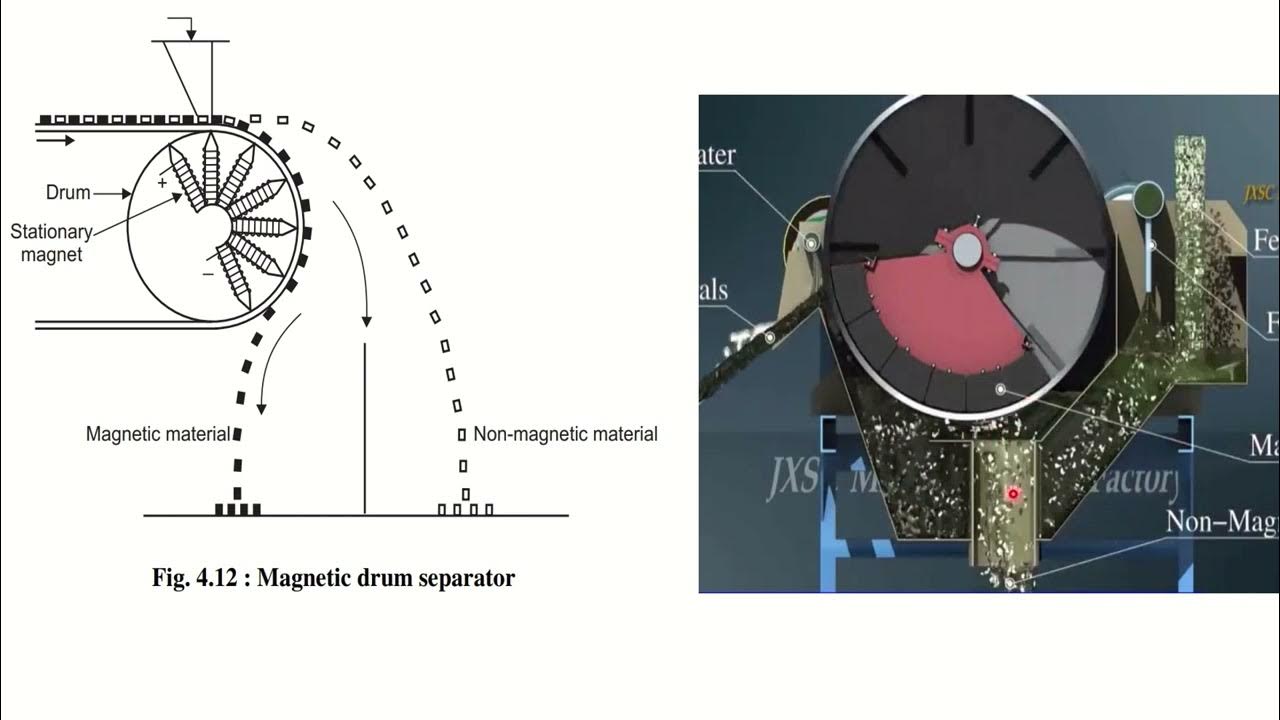
Imagine a rotating drum with a powerful magnet inside. As your material flows over the drum, any iron or steel gets stuck to the surface while everything else falls away. The drum keeps spinning, carrying the metal to a separate collection area.
Pretty smart, right?
Los componentes básicos que hacen que funcione
Here’s what makes these machines tick:
1. El tambor giratorio
The outer drum is made from non-magnetic stainless steel. This is crucial because if the drum itself was magnetic, it wouldn’t work properly.
Most drums range from 12 to 24 inches in diameter. Bigger operations might use drums up to 60 inches wide.
2. El núcleo magnético estacionario
Aquí es donde se produce la magia.
Inside the rotating shell sits a fixed magnetic assembly. It typically covers 120° to 180° of the drum’s circumference. These magnets can be:
- Ceramic magnets (good for basic applications)
- Rare earth magnets (when you need serious pulling power)
The magnets don’t move. Only the outer shell rotates around them.
3. Sistema de alimentación
You can’t just dump material onto the drum and hope for the best.
Most setups use:
- Vibratory feeders for controlled flow
- Conveyor belts for continuous operations
- Gravity chutes for simple applications
4. Rampas de descarga
These physical barriers separate the clean product from the captured metal. Without proper chutes, you’d just mix everything back together.
Cómo funciona un separador de tambor magnético
Now for the good stuff.
Here’s exactly how these machines separate metal from your product:
Paso 1: Introducción del material
Your mixed material flows onto the drum surface through the feed system. The key here? Uniform distribution.
If material bunches up, separation efficiency drops like a rock.
Paso 2: Captura magnética
As material passes over the drum, the magnetic field does its thing.
Ferrous materials (iron, steel, magnetic stainless) get instantly attracted and stick to the drum surface. The magnetic force is strongest right at the drum surface and weakens as you move away.
Non-magnetic materials? They couldn’t care less about the magnet. They follow gravity and fall into the clean product chute.
Paso 3: Fase de transporte
Here’s where it gets clever.
The drum shell rotates (usually 20-40 RPM), carrying the captured metal along for the ride. The metal stays stuck because it’s still within the magnetic field.
Paso 4: La liberación
Remember how the magnet only covers part of the drum?
As the drum rotates, it carries the metal past the edge of the magnetic field. Once the metal moves beyond the magnet’s influence, gravity takes over. The metal drops into a separate collection chute.
Paso 5: Funcionamiento continuo
¿Y lo mejor?
This process repeats endlessly. No stopping. No manual cleaning. The drum just keeps spinning, separating metal 24/7.
Aplicaciones reales que importan
Let me show you where these separators really shine:
Explotaciones mineras
In iron ore processing, magnetic drums recover valuable magnetite from waste rock. Some operations report recovery rates above 95%.
Procesado de alimentos
Ever found a metal fragment in your cereal? Neither have I, thanks to magnetic separation.
Food plants use these drums to remove:
- Broken machinery parts
- Nails from wooden pallets
- Metal shavings from conveyors
Instalaciones de reciclaje
Recyclers use magnetic drums to:
- Pull steel from shredded cars
- Separate ferrous metals from municipal waste
- Clean recycled glass of metal contaminants
Procesado químico
Chemical plants protect their equipment by removing:
- Valve fragments
- Pipe scale
- Metal catalyst particles
La ciencia tras la separación
Time to get a bit technical (but I’ll keep it simple).
The separation depends on magnetic susceptibility – basically how much a material loves magnets.
Materials fall into three categories:
- Ferromagnético (strongly attracted)
- Iron, steel, nickel
- Some stainless steels
- Paramagnético (weakly attracted)
- Aluminum (barely)
- Platinum
- Some minerals
- Diamagnético (slightly repelled)
- Copper, gold, silver
- Most plastics
- Organic materials
Magnetic drum separators work best with ferromagnetic materials. The stronger the magnetic response, the better the separation.
Factores clave que afectan al rendimiento
Not all separations are created equal.
Here’s what impacts how well your drum separator works:
1. Velocidad de la cinta
Too fast? Metal doesn’t have time to stick.
Too slow? You’re wasting production capacity.
The sweet spot usually sits between 100-300 feet per minute.
2. Profundidad del material
Thicker material beds mean weaker magnetic fields at the top. Most operations keep depth under 2 inches for best results.
3. Tamaño de las partículas
Smaller particles need stronger magnets. A nail is easy to catch. Iron dust? That’s trickier.
4. Contenido de humedad
Wet materials can cause clumping, reducing separation efficiency. Most drums work best with moisture under 5%.
5. Temperatura
High temps can demagnetize permanent magnets. Most ceramic magnets lose strength above 180°F. Rare earth magnets can handle up to 350°F.
Elegir el separador de tambor magnético adecuado
Here’s my framework for selecting the perfect drum:
Paso 1: Defina sus objetivos
What are you trying to achieve?
- Protect downstream equipment?
- Recover valuable metals?
- Meet purity specifications?
Paso 2: Analice su material
Considéralo:
- Particle size range
- Flow rate (tons per hour)
- Type of ferrous contaminants
- Material characteristics (dusty, sticky, abrasive?)
Paso 3: Calcular la resistencia necesaria
This gets technical, but here’s the simplified version:
Light contamination (occasional nuts, bolts): Standard ceramic magnets
Heavy contamination (continuous metal): Rare earth magnets
Fine particles (metal dust, shavings): Definitely rare earth
Paso 4: Dimensionar el sistema
Drum width should be at least 6 inches wider than your material stream. This prevents spillage around the edges.
Buenas prácticas de instalación
I’ve seen great separators fail because of poor installation.
Here’s how to do it right:
La ubicación importa
Install your drum where:
- Material flow is already controlled
- There’s easy access for maintenance
- Discharged metal won’t contaminate clean product
Consideraciones sobre la altura
The drum should sit 6-12 inches above your conveyor belt. Too high reduces magnetic attraction. Too low causes mechanical interference.
Estructura de apoyo
These drums can weigh over 1,000 pounds. Your support frame needs to handle:
- Static weight
- Rotational forces
- Material impact loads
Electrical Requirements
Most drums need:
- 3-phase power for the motor
- Variable speed drive (optional but recommended)
- Safety lockout capabilities
Maintenance That Prevents Problems
The beauty of magnetic drums? They’re incredibly low maintenance.
But “low” doesn’t mean “no.”
Daily Checks
- Visual inspection for buildup
- Listen for unusual noises
- Check discharge chutes for blockages
Weekly Tasks
- Clean the drum surface
- Inspect belt/chain tension
- Verify rotation speed
Monthly Maintenance
- Lubricate bearings
- Check mounting bolts
- Test magnetic strength
Annual Overhaul
- Replace worn shells
- Rebuild drive components
- Professional magnetic testing
Problemas comunes y soluciones
Even the best equipment has issues.
Here’s what I see most often:
Problem: Poor Metal Removal
Causes:
- Weak magnets
- Material bed too thick
- Belt speed too fast
Solutions:
- Upgrade to stronger magnets
- Reduce material depth
- Slow down feed rate
Problem: Metal Carryover
Causes:
- Drum speed too fast
- Discharge chute misaligned
- Magnetic arc too wide
Solutions:
- Reduce drum RPM
- Adjust chute position
- Modify magnetic assembly
Problem: Product Contamination
Causes:
- Metal bouncing back
- Improper chute design
- Air currents
Solutions:
- Install splitter plates
- Redesign discharge area
- Add dust collection
Cost Considerations
Let’s talk money.
A quality magnetic drum separator runs $10,000 to $100,000+. The price depends on:
- Size (bigger = more expensive)
- Magnet type (rare earth costs 3x ceramic)
- Housing (enclosed systems cost more)
- Special features (variable speed, instrumentation)
Pero aquí está la cosa:
The payback period is usually under 2 years. Sometimes just months.
How?
- Reduced equipment damage
- Less product contamination
- Lower labor costs
- Higher product value
Future Developments
The magnetic separation industry isn’t standing still.
Esto es lo que viene:
Smart Separators
- IoT connectivity
- Alertas de mantenimiento predictivo
- Real-time performance monitoring
Materiales avanzados
- Stronger permanent magnets
- High-temperature capabilities
- Corrosion-resistant designs
Eficiencia energética
- Regenerative drives
- Optimized magnetic circuits
- Menor consumo de energía
Making Your Decision
Bottom line?
If you’re handling bulk materials with ferrous contamination, you probably need a magnetic drum separator. The question isn’t if but which one.
Start small if you’re unsure. Rent or lease a unit to test in your application. Once you see the results, you can optimize your permanent installation.
Remember: the best separator is the one that matches your specific needs. There’s no one-size-fits-all solution.
Comprender how does a magnetic drum separator work gives you the power to protect your equipment, improve your product quality, and boost your bottom line. These machines might seem simple, but their impact on modern manufacturing and processing is absolutely massive.