
¿Alguna vez se te ha caído una caja de tornillos en el garaje y te has pasado la siguiente hora a gatas recogiéndolos?
Yo también he pasado por eso. Y precisamente por eso me encantan los barridos magnéticos.
¿Qué es una barredora magnética?
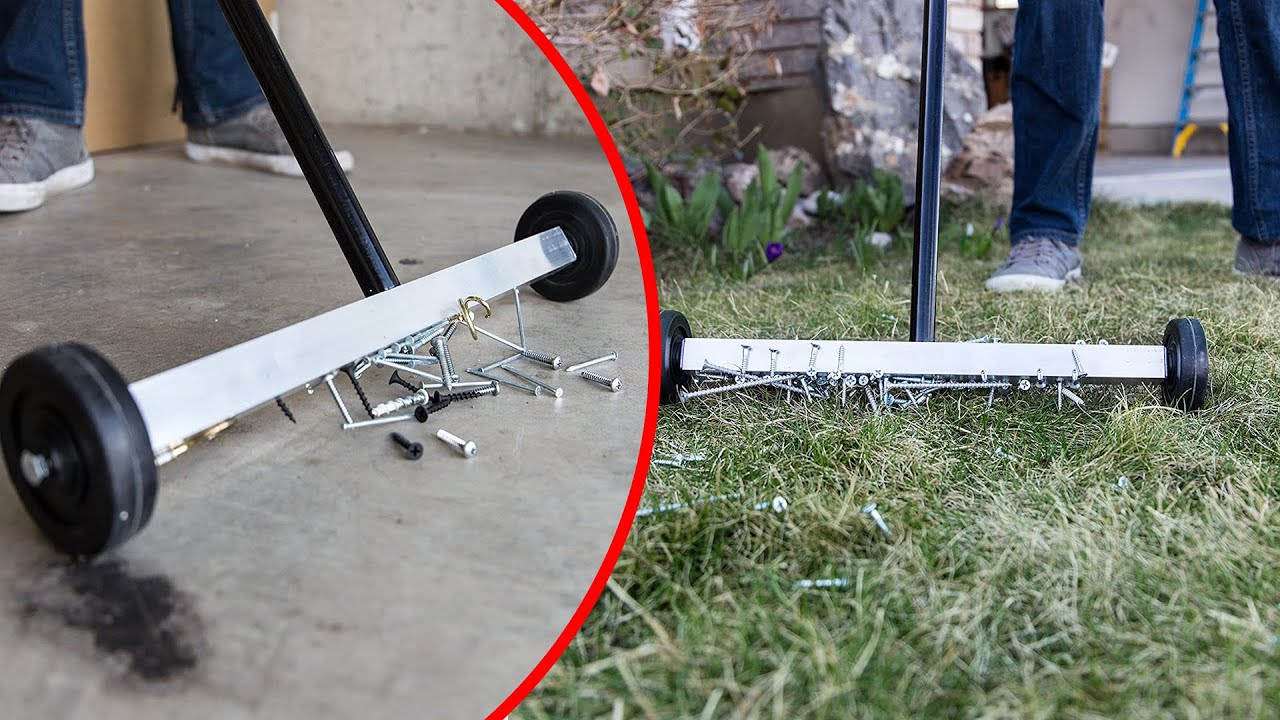
Un barrido magnético utiliza potentes imanes para recoger de las superficies residuos de metales ferrosos, como clavos, tornillos y virutas metálicas. Estas herramientas evitan daños costosos: un solo clavo puede suponer $200 en reparaciones de neumáticos, mientras que las astillas metálicas en la maquinaria provocan pérdidas por tiempo de inactividad que ascienden a miles.
La gama de modelos abarca desde unidades portátiles para talleres hasta versiones remolcables para aparcamientos, y las barredoras de empuje de alta calidad ($200-2.000) se amortizan con solo evitar un único incidente.
En este puesto, como profesional proveedor de barredoras magnéticas, os lo contaré todo al respecto.
Por qué los residuos metálicos son un problema mayor de lo que crees
Déjame describírtelo:
Una obra de construcción genera aproximadamente 15 libras de residuos metálicos al día. Entre ellos se incluyen clavos, tornillos, recortes de alambre y virutas de metal.
¿Sin una limpieza adecuada? Esos residuos provocan:
- Pinchazos (coste medio de reparación: $200-400)
- Daños en el equipo ($1.000+ por incidente)
- Accidentes laborales (pérdida de productividad + responsabilidad civil)
- Infracciones de la OSHA ($15 625 por infracción en 2026)
Las cifras no mienten. Los residuos metálicos suponen un coste de millones para las empresas cada año.
Pero lo que de verdad me molesta es lo siguiente:
Los métodos tradicionales de limpieza son un asco. Las escobas empujan el metal hacia las grietas. Recogerlo a mano lleva una eternidad. Y tú siempre perderme algo.
Aquí entra en escena el barrido magnético.
Cómo funcionan realmente las barredoras magnéticas
El concepto es muy sencillo:
Los imanes potentes generan un campo magnético. Este campo atrae a los metales ferrosos (hierro, acero, níquel). Los metales se adhieren a la barredora hasta que los sueltes.
¿Pero la ejecución? Ahí es donde la cosa se pone interesante.
La mayoría de las barredoras magnéticas utilizan uno de estos dos tipos de imanes:
Imanes de ferrita (cerámicos)
- Ideal para residuos en general
- Rentable
- Funciona en la mayoría de las condiciones
Imanes de neodimio
- 10 veces más potente que la ferrita
- Recoge las partículas metálicas minúsculas
- Un precio más elevado
Los imanes se encuentran dentro de una carcasa protectora (normalmente de aluminio o acero inoxidable). Esta carcasa protege los imanes y, al mismo tiempo, permite que el campo magnético se extienda hacia abajo.
Y aquí viene lo ingenioso:
Las barredoras modernas incluyen un mecanismo de liberación. Tira de una palanca y los imanes se alejan de la bandeja colectora. Todo ese metal cae directamente en tu cubo de basura. No hay que tocar objetos afilados. No hay que hacer palanca para sacar tornillos atascados.
Es genial.
Los 5 tipos principales de barredoras magnéticas
No todas las barredoras magnéticas son iguales.
El tipo que necesitas depende de tu situación concreta.
1. Barredoras magnéticas de empuje
Parecen escobas normales. Pero, en lugar de cerdas, tienen imanes.
Lo mejor para:
- Talleres
- Garajes
- Pequeños almacenes
- Espacios interiores
Características técnicas habituales:
- Ancho de barrido de 12 a 36 pulgadas
- Resistencia a la tracción de 50-100 lb
- Funcionamiento manual
En mi garaje utilizo una barredora manual. Ha recogido de todo, desde tornillos que se me habían caído hasta limaduras de metal que ni siquiera sabía que estaban ahí.
2. Barredoras magnéticas remolcadas
Piensa en ellos como la artillería pesada de la limpieza de metales.
Lo mejor para:
- Aparcamientos
- Obras de construcción
- Pistas de los aeropuertos
- Amplias zonas al aire libre
Características técnicas habituales:
- Ancho de barrido de 48 a 96 pulgadas
- Más de 200 libras de resistencia a la tracción
- Alimentado por el vehículo
Consejo de experto: Busca modelos con ajuste de altura. La posibilidad de bajar el imán para acercarlo a superficies rugosas mejora considerablemente la captación.
3. Barredoras montadas en carretillas elevadoras
Se acoplan directamente a las horquillas de las carretillas elevadoras o a los parachoques de los vehículos.
Lo mejor para:
- Almacenes con pasillos estrechos
- Muelles de carga
- Zonas de acceso restringido
Beneficio clave: Limpia mientras trabajas. No hace falta barrer por separado.
4. Barredoras magnéticas manuales
Básicamente, es un imán en un palito. Sencillo, pero eficaz.
Lo mejor para:
- Limpieza de manchas
- Espacios reducidos
- Recogidas rápidas
- Uso doméstico
Siempre llevo uno de estos en mi camioneta. Me ha salvado de varios pinchazos a lo largo de los años.
5. Barredoras magnéticas suspendidas
Estos se cuelgan de los vehículos y mantienen una altura constante independientemente del terreno.
Lo mejor para:
- Superficies rugosas
- Zonas sin asfaltar
- Aparcamientos de grava
El diseño suspendido evita los daños causados por los golpes, al tiempo que mantiene una distancia de recogida óptima.
Características clave que realmente importan
Tras probar docenas de barredoras magnéticas, esto es lo que distingue a las buenas de las excelentes:
Fuerza magnética
Esto se mide en “fuerza de tracción”, es decir, básicamente cuántas libras puede levantar el imán.
Requisitos mínimos recomendados:
- Uso ligero (uso doméstico): 50 libras
- Uso medio (talleres): 100 libras
- Uso intensivo (industrial): más de 200 libras
Pero aquí está el problema:
La fuerza de atracción disminuye exponencialmente con la distancia. Un imán con una fuerza de atracción de 100 lb en el punto de contacto podría llegar a ejercer una fuerza de solo 10 lbs a 2 pulgadas de distancia.
Mecanismo de liberación
Imprescindible para cualquier líbero que se precie.
Los mejores diseños utilizan un palanca mecánica que aleja físicamente el imán de la placa colectora. No hace falta electricidad. Funciona siempre.
Evita las barredoras que no cuenten con mecanismos de liberación. Perderás tiempo (y te arriesgarás a sufrir lesiones) al tener que retirar los residuos manualmente.
Ajuste de la distancia al suelo
Cada tipo de residuo requiere un espacio libre diferente:
- Virutas finas de metal: 0,5-1 pulgada
- Clavos y tornillos: 1-2 pulgadas
- Tornillos grandes: 2-3 pulgadas
La altura ajustable te ofrece flexibilidad. La altura fija te obliga a hacer concesiones.
Calidad de las ruedas
Parece algo sin importancia. Pero no lo es.
Unas buenas ruedas significan:
- Funcionamiento fluido
- Sin daños en el suelo
- Mejor recogida de residuos
- Mayor vida útil de los equipos
Busca ruedas de goma maciza o de poliuretano. Evita el plástico duro.
La economía de las barredoras magnéticas (con cifras reales)
Hablemos del retorno de la inversión.
Una barredora magnética de calidad cuesta entre $200 y 2.000, dependiendo del tamaño y las prestaciones.
Compáralo con el coste de NO tener uno:
Reparaciones de neumáticos: $200-400 por incidencia
Daños en el equipo: $: entre 1.000 y 5.000 por incidente
Pérdida de productividad: $500-2.000 al día
Accidentes laborales: $ entre 5.000 y 50.000+ por incidente
Un incidente evitado ya compensa la inversión en la barredora.
Pero el verdadero ahorro proviene de la eficiencia.
Limpieza manual de una superficie de 10 000 pies cuadrados: 4 horas
Limpieza con barredora magnética: 30 minutos
Con un coste de mano de obra de $25 por hora, eso supone un ahorro de $87,50 por limpieza.
Si haces los cálculos para el barrido diario, verás que solo en ahorro de mano de obra anual ya superas los $30 000+.
Dónde tienen mayor impacto las barredoras magnéticas
Hay algunos entornos en los que es imprescindible utilizar barredoras magnéticas:
Obras de construcción
Hay restos de metal por todas partes. Clavos de la estructura. Tornillos de las placas de yeso. Restos de cable de las instalaciones eléctricas.
Si no barres a diario, te espera lo siguiente:
- Varios pinchazos
- Trabajadores lesionados
- Subcontratistas enfadados
Instalaciones de fabricación
Las virutas de metal que se generan en las operaciones de mecanizado son especialmente molestas. Son afiladas, pequeñas y se meten por todas partes.
Barrenar con regularidad previene:
- Productos contaminados
- Atascos en los equipos
- Riesgos de resbalones
Aeropuertos
Esto va en serio.
Un solo tornillo en una pista de aterrizaje puede destrozar un motor de avión que cuesta varios millones de dólares. Por eso los aeropuertos utilizan sistemas especializados de detección de objetos extraños (FOD) (Residuos de objetos extraños) barredoras magnéticas a diario.
Lo que está en juego no podría ser más importante.
Talleres de automóviles
Entre los trabajos en los frenos, los cambios de neumáticos y las reparaciones generales, los talleres de automóviles generan toneladas de residuos metálicos.
Las barredoras magnéticas mantienen:
- Las zonas de clientes están limpias
- Zapatos de técnico resistentes a los pinchazos
- Primas de seguro bajas
Trabajos de techado
Los clavos para tejados tienen una habilidad especial para acabar en los neumáticos. Todo equipo de techadores debería disponer de un barrido magnético para la limpieza tras finalizar el trabajo.
Es la diferencia entre clientes satisfechos y llamadas de reclamación.
Cómo elegir la barredora magnética adecuada
Este es mi esquema de selección:
Paso 1: Define tu zona
- ¿En el interior o al aire libre?
- ¿Superficie lisa o rugosa?
- ¿Cuál es la superficie?
Paso 2: Identificar el tipo de residuos
- ¿Virutas pequeñas o tornillos grandes?
- ¿Cuánto al día?
- ¿Hay algún riesgo especial?
Paso 3: Analizar el funcionamiento
- ¿Quién lo utilizará?
- ¿Con qué frecuencia?
- ¿Espacio de almacenamiento?
Paso 4: Establece tu presupuesto
- Coste inicial
- Necesidades de mantenimiento
- Esperanza de vida
Para la mayoría de las empresas pequeñas y medianas, recomiendo empezar con una barredora manual de calidad. Siempre se puede cambiar por una mejor más adelante.
Mantenimiento y buenas prácticas
Las barredoras magnéticas requieren poco mantenimiento, pero no es que no requieran ninguno.
A diario:
- Recogida de escombros sin carga
- Inspección visual
- Limpia la superficie del imán
Semanal:
- Comprueba el estado de las ruedas
- Mecanismo de liberación de pruebas
- Viviendas limpias
Mensual:
- Lubricar las piezas móviles
- Aprieta los elementos de fijación que estén sueltos
- Limpieza a fondo de toda la unidad
Consejo de experto: Mantén los dispositivos electrónicos alejados de los barredores magnéticos potentes. Lo aprendí por las malas con un teléfono de la empresa.
Conclusiones sobre las barredoras magnéticas
Los residuos metálicos son un problema costoso que tiene una solución sencilla.
Las barredoras magnéticas convierten horas de limpieza manual peligrosa en minutos de trabajo seguro y eficaz.
Tanto si diriges un pequeño taller como si gestionas una gran instalación industrial, hay una barredora magnética diseñada para satisfacer tus necesidades.
La inversión se amortiza rápidamente gracias a:
- Lesiones evitadas
- Reducción de los daños en los equipos
- Ahorro de mano de obra
- Mejora del cumplimiento de las normas de seguridad
Pero esto es lo que realmente importa:
Tranquilidad.
Saber que tus suelos están limpios. Que tus trabajadores están a salvo. Que no recibirás esa temida llamada sobre otro pinchazo o un empleado lesionado.
Eso es lo que hace que las barredoras magnéticas sean un equipo imprescindible, y no solo herramientas que está bien tener.
¿Qué es, pues, un barrido magnético? Es tu primera línea de defensa contra uno de los riesgos laborales más comunes (y evitables). Y, en mi opinión, eso lo convierte en algo indispensable.