Riepilogo rapido
Il magnete migliore per la pesca con il magnete è un magnete al neodimio a doppia faccia con una forza di trazione compresa tra 800 e 1.200 libbre, racchiuso in un involucro d’acciaio con rivestimento in nichel-rame-nichel. I principianti dovrebbero iniziare con una forza compresa tra 300 e 500 libbre per evitare che i magneti rimangano incastrati in modo permanente. Utilizzate sempre un frenafiletti sui bulloni a occhiello, una corda da arrampicata di qualità con una resistenza superiore a 3.000 libbre e ricordate che la forza di trazione effettiva è in genere inferiore di 30-50% rispetto ai valori dichiarati.
Ti sei mai chiesto quale magnete sia davvero efficace per la pesca con il magnete? Ti capisco. Con decine di opzioni disponibili, scegliere quella giusta può sembrare un’impresa ardua.
Ecco il problema:
Se scegli la calamita sbagliata, ti perderai delle scoperte fantastiche. O peggio ancora? La tua calamita finirà nelle profondità oscure.
Come professionista fornitore di magneti da pesca, ho provato più di 20 diversi magneti da pesca. E ho capito esattamente cosa distingue i prodotti migliori da quelli che non valgono proprio nulla.
In questa guida ti mostrerò:
- Il tipo esatto di magnete che permette di recuperare i reperti migliori
- Perché i valori di resistenza possono essere fuorvianti (e cosa conta davvero)
- La mia configurazione personale che non mi ha mai deluso
- Errori comuni che ti costeranno denaro
Immergiamoci in questa storia.
Cosa rende eccezionale un magnete da pesca?
Non tutti i magneti sono uguali.
Fidati di me su questo.
Ho imparato questa lezione a mie spese quando il mio primo magnete (uno economico in ferrite) non è riuscito nemmeno a sollevare un chiodo arrugginito.
I migliori magneti per la pesca con il magnete presentano le seguenti caratteristiche:
1. Materiale al neodimio
Questo non è negoziabile.
I magneti al neodimio sono 10 volte più potenti dei magneti normali. Sono l'unico tipo abbastanza potente per la pesca con i magneti a livello professionale.
(Chiamati anche magneti “delle terre rare”, anche se in realtà non sono poi così rari.)
2. Involucro in acciaio
Il neodimio grezzo è fragile. Del tipo che basta farlo cadere una volta sola per farlo andare in frantumi.
Ecco perché i magneti da pesca di qualità sono racchiusi in un involucro d’acciaio. L’involucro svolge due funzioni:
- Protegge il magnete dagli urti
- Concentra il campo magnetico verso il basso
Consiglio da esperto: scegliete involucri in acciaio inossidabile con rivestimento in nichel-rame-nichel. Resistono alla ruggine molto meglio dell’acciaio normale.
3. Punto di fissaggio sicuro
Il tuo magnete ha bisogno di un sistema a prova di bomba per fissare la corda.
Le soluzioni migliori? Fori svasati con bulloni ad occhiello. Assicurati che le filettature siano profonde e pulite.
(Mi è capitato di vedere magneti con anelli saldati che si staccavano di colpo. Non è affatto piacevole quando si sta sollevando qualcosa di pesante.)
Che tipo di magnete usare per la pesca con il magnete
Potenza dei magneti: cosa ti serve davvero
Ecco dove la maggior parte dei principianti commette un errore:
Comprano il magnete più potente che si possa trovare.
Ma il punto è questo:
Un magnete da 3.000 libbre sembra fantastico… finché non si attacca a un pilone del ponte. A quel punto devi tagliare la corda e perdi $150.
Ecco i livelli di difficoltà che consiglio in base al livello di esperienza:
Principianti: 300-500 libbre
Perfetto per imparare le basi. Abbastanza resistente da recuperare monete, attrezzi e piccoli reperti. Ma maneggevole nel caso in cui si incastri.
Livello intermedio: 800-1.200 libbre
Questo è il punto di equilibrio ideale per la maggior parte delle persone. È possibile sollevare biciclette, casseforti e oggetti di grandi dimensioni senza bisogno di una forza sovrumana.
Livello avanzato: oltre 1.500 libbre
Prova questa tecnica solo se hai esperienza. E tieni pronto un piano di riserva per quando, inevitabilmente, si bloccherà.
Ricorda: questi valori si riferiscono a condizioni ideali. La forza di trazione effettiva è solitamente inferiore di 30-50%.
Magneti bifacciali vs magneti monofacciali
Questo dibattito infuria in tutti i forum dedicati alla pesca con la calamita.
Lascia che ci pensi io:
I magneti bifacciali sono più adatti ai principianti.
Perché?
- Rilevano gli elementi sia durante il trascinamento che durante il rilascio
- Meno soggetto a capovolgersi e a mancare i bersagli
- Maggiore copertura per ogni lancio
I magneti monofacciali hanno la loro utilità. Offrono una maggiore potenza in rapporto al prezzo. Inoltre, i pescatori esperti riescono a maneggiarli con maggiore precisione.
Ma se sei alle prime armi? Scegli il modello a doppia faccia.
La mia attrezzatura personale per la pesca con la calamita
Dopo anni di tentativi ed errori, ecco cosa uso:
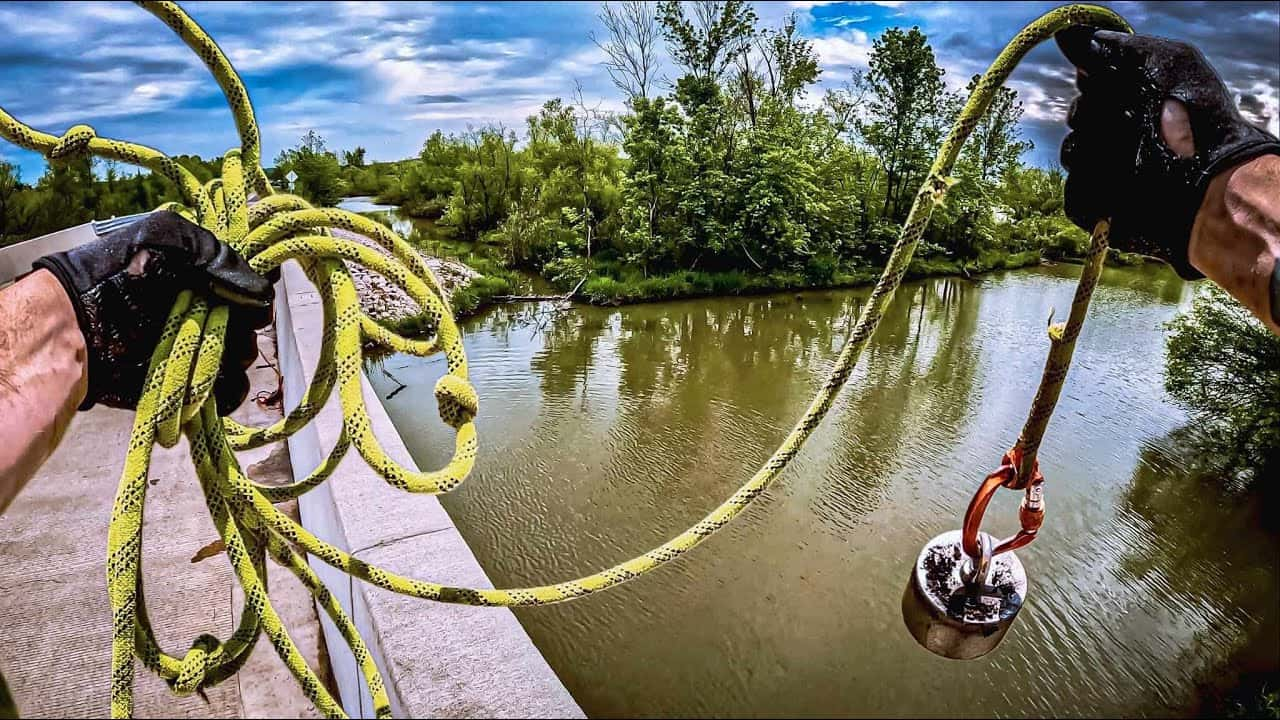
Magnete principale: Neodimio bifacciale da 880 libbre
- 3,5 pollici di diametro
- Fori svasati con bulloni ad occhiello M10
- Mi è costato $85 (ne è valsa davvero la pena)
Corda: 65 piedi di corda da arrampicata da 8 mm
- Resistenza alla rottura di 3.300 libbre
- Arancione brillante (più facile da individuare)
- Informazioni su $40
Accessori indispensabili:
- Fissaggio filettato (impedisce l'allentamento del bullone ad occhiello)
- Guanti resistenti al taglio
- Gancio da arrampicata (per staccare i magneti)
Investimento totale? Meno di $150.
Questa attrezzatura ha permesso di recuperare di tutto, dalle motociclette d'epoca ai cimeli della Seconda Guerra Mondiale.
Tipi comuni di magneti (in ordine di classificazione)
Lascia che ti illustri le opzioni a tua disposizione:
1. Magneti a 360 gradi (i migliori in assoluto)
Questi magneti cilindrici aderiscono da qualsiasi angolazione. Costosi, ma incredibilmente efficaci.
Pro:
- Potenziale di cattura massimo
- Raramente rimane incastrato contro le superfici
- Funzionano alla grande in corrente
Contro:
- 30-50% è più costoso
- Più pesante rispetto a prodotti simili a doppia faccia
2. Magneti a doppia faccia per tazze (il miglior rapporto qualità-prezzo)
Il consiglio che do di solito alla maggior parte delle persone.
Pro:
- Ottimo rapporto qualità-prezzo
- Versatile per diverse tecniche
- Ampiamente disponibile
Contro:
- Potrebbe ribaltarsi se non è abbastanza pesante
- Due punti di fissaggio da controllare
3. Magneti su un solo lato (opzione economica)
Va bene per sondare il terreno. Non è l'ideale a lungo termine.
Pro:
- L'opzione più economica
- Tutta la forza magnetica su un solo lato
- Peso ridotto
Contro:
- Elementi mancanti quando si capovolge
- Tecniche di lancio limitate
4. Magneti a morsetto (da evitare)
Alcuni magneti utilizzano un meccanismo di bloccaggio. Sembrano ingegnosi, ma nella pratica non funzionano.
Le parti mobili si intasano di detriti. Assolutamente no.
Le dimensioni contano (ma non nel modo in cui pensi)
Più grande non significa sempre migliore.
Un magnete compatto da 500 libbre spesso offre prestazioni migliori rispetto a uno massiccio da 300 libbre.
Perché?
Concentrazione della forza magnetica.
I magneti di qualità racchiudono una potenza notevole in dimensioni ridotte. Il mio magnete preferito, da 880 libbre, misura solo 3,5 pollici di diametro.
Nel frattempo, ho visto magneti da 4 pollici con una portata nominale di appena 400 libbre.
La lezione da trarne? Controllate sia le dimensioni che i valori di resistenza.
Rivestimento e resistenza alla corrosione
Il tuo magnete dovrà affrontare una vita dura.
Esposizione costante all'acqua. Urti. Attrito contro il cemento.
Verificate la presenza delle seguenti caratteristiche di protezione:
- Rivestimento a triplo strato (Ni-Cu-Ni di serie)
- Bordi sigillati nel punto di contatto tra il magnete e l'involucro
- Componenti in acciaio inossidabile
- Paraurti in gomma (sui modelli di fascia alta)
Anche se è protetto, asciuga sempre il magnete dopo l'uso. Una rapida passata con un panno previene la corrosione a lungo termine.
Dove acquistare (e dove non farlo)
Ho comprato magneti un po’ ovunque. Ecco cosa ho imparato:
Fonti più attendibili:
- Rivenditori specializzati in pesca con magneti
- Fornitori di magneti industriali come OsencMag
- Amazon (ma controlla attentamente le recensioni)
Da evitare:
- A caso eBay venditori
- Wish/AliExpress (la qualità varia notevolmente)
- Negozi di ferramenta (prezzi troppo alti, scelta limitata)
Per un magnete di qualità, preparatevi a spendere $60-120. Qualunque cosa al di sotto di $40 è probabilmente robaccia.
Considerazioni sulla sicurezza
I magneti potenti incutono rispetto.
Ho visto dita schiacciate tra due magneti. Dispositivi elettronici completamente azzerati. Persino gli avvisi relativi ai pacemaker sono reali.
Regole di sicurezza essenziali:
- Tenere i magneti a una distanza di almeno 12+ pollici dai dispositivi elettronici
- Non lasciare mai che due magneti potenti si attacchino tra loro
- Avvertire i passanti prima di lanciare
- Usa nodi adeguati (non un nodo qualsiasi)
- Verifica prima le leggi locali
In alcune zone la pesca con i magneti è completamente vietata. In altre è necessario ottenere un permesso. Informati bene.
Come provare il tuo nuovo magnete
Hai il tuo magnete? Ecco come provarlo:
Il test in garage:
- Trova qualcosa di metallico e pesante (un vecchio disco del freno va benissimo)
- Fissa bene la corda
- Prova di sollevamento in verticale
- Prova a tirare in diverse direzioni
- Esercitati con la tecnica di rilascio
Questo ti aiuta ad acquisire sicurezza prima di entrare in acqua.
Primi consigli sulla scelta della location:
- Inizia in acque poco profonde (moli e pontili)
- Evitare le zone con strutture sommerse
- Mattina = meno affollato
- Di' a qualcuno dove stai andando
Funzionalità avanzate di Magnet
Una volta che ne sarai conquistato (gioco di parole voluto), prendi in considerazione questi aggiornamenti:
Luci a LED: Alcuni magneti sono dotati di LED impermeabili. Una vera rivoluzione per le acque torbide.
Meccanismi a sgancio rapido: Consente di scambiare i magneti senza dover rifare i nodi.
Dimensioni dei filetti personalizzate: Adattalo all’hardware standard della tua regione.
Localizzatori GPS: Per chi utilizza magneti estremamente potenti.
Una manutenzione che fa la differenza
Un magnete ben curato dura anni.
Dopo ogni viaggio:
- Risciacquare con acqua fresca
- Asciugare completamente
- Controllare il serraggio dei bulloni ad occhiello
- Se è allentato, applicare un frenafiletti
- Conservare lontano da oggetti metallici
Una volta al mese, ispezionalo accuratamente. Controlla che non ci siano crepe, macchie di ruggine o componenti allentati.
Il bilancio
Quale magnete per la pesca con il magnete dovresti acquistare, in realtà?
Per le persone con codice 90%: Un magnete al neodimio bifacciale di alta qualità da 800-1.200 libbre.
È abbastanza robusto per i ritrovamenti più impegnativi. Facile da maneggiare quando si incastra. E non costa un occhio della testa.
Il mio consiglio specifico? Il magnete a doppia faccia da 880 libbre di cui ho parlato prima. Sono ormai tre anni che lo uso intensamente e funziona ancora alla grande.
Ricorda:
- Solo neodimio (senza eccezioni)
- È obbligatorio l'uso di un involucro in acciaio
- Inizia con un'intensità moderata
- Investi anche in una corda di qualità
- Adottare sempre le misure di sicurezza necessarie durante la manipolazione
La pesca con il magnete premia la pazienza e l’attrezzatura giusta. Procurati un magnete adeguato, impara le tecniche e in men che non si dica tirerai a riva dei veri e propri tesori.
Quale magnete sia il più adatto per la pesca con il magnete dipende dai tuoi obiettivi. Ma ora sai esattamente cosa cercare.
Buona caccia!