Let me ask you something:
Ever watched metal shavings jump to a magnet? Now imagine that on an industrial scale, running 24/7, automatically sorting tons of material. That’s exactly what magnetic drum separators do. And the advantages of magnetic drum technology might surprise you.
Here’s the deal:
Whether you’re running a recycling plant, mining operation, or food processing facility, these rotating cylinders with powerful magnets inside are absolute workhorses.
I’ve seen facilities transform their operations with just ONE properly placed magnetic drum. In this post, as a professional magnetic drum manufacturer, I will share 7 key advantages of magnetic drums!
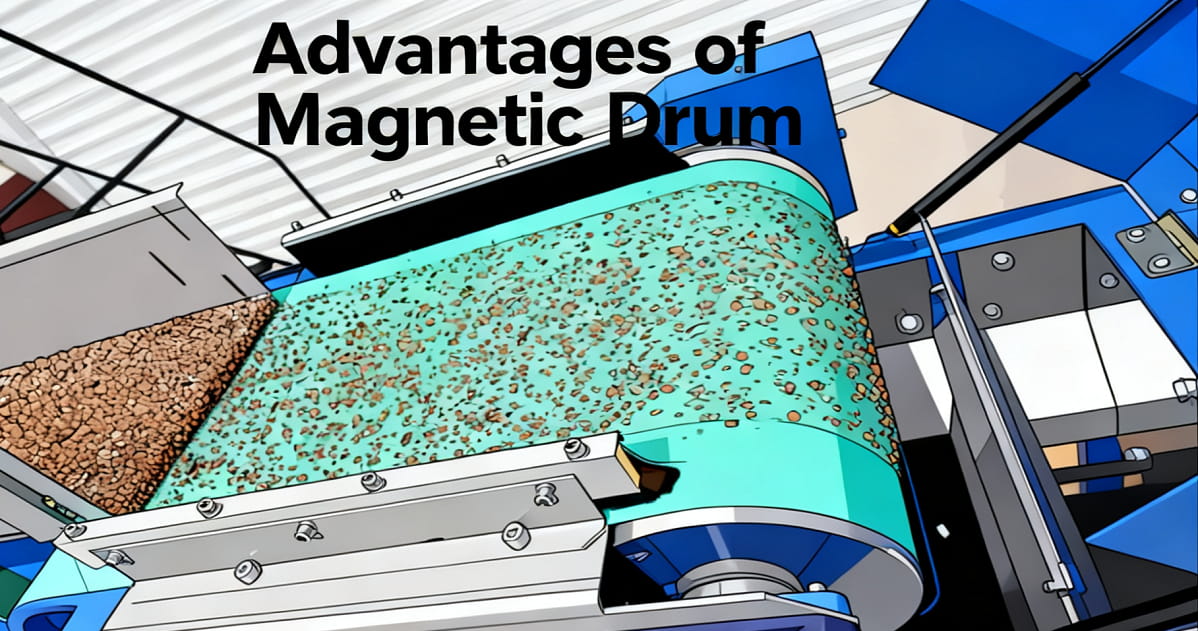
Table of Contents
What Exactly Is a Magnetic Drum Separator?
Think of it as a giant rotating cylinder that acts like a super-powered magnet.
Here’s how it works:
Material flows over the drum. Ferrous metals stick to it. Everything else keeps moving. The drum rotates, carries the metal away, and drops it in a separate bin.
Simple? Yes. Effective? Incredibly.
(And that’s why industries from mining to recycling swear by them.)
The 7 Advantages of the Magnetic Drum Separator
1. Continuous, Self-Cleaning Operation
This is HUGE.
Unlike magnetic plates or grates that need manual cleaning, magnetic drums clean themselves. Automatically.
Here’s what happens:
The drum keeps rotating. Captured metal moves to a discharge area. Gravity does the rest.
Zero downtime for cleaning.
I’ve seen recycling plants process 100+ tons per hour without stopping once. Try doing that with manual sorting.
2. Insane Processing Capacity
Speaking of capacity…
Modern industrial magnetic drums handle mind-blowing volumes:
- Municipal waste facilities: 50-100 tons/hour
- Mining operations: Up to 500 tons/hour
- Automotive shredding: 75 vehicles daily
One facility I visited processes 800 tons of waste daily. Their magnetic drum recovers 40 tons of ferrous metal.
Every. Single. Day.
(That’s serious money from what would otherwise be landfill.)
3. Equipment Protection That Pays for Itself
Here’s something most people don’t realize:
The biggest value often isn’t the recovered metal. It’s protecting your downstream equipment.
Think about it:
One stray bolt can destroy a $100,000 crusher. A piece of rebar can shut down production for days.
Magnetic drums catch that stuff before it causes damage.
Pro Tip: Position drums early in your processing line. They’re like insurance policies that actually make you money.
4. Minimal Maintenance (Seriously)
Want to know the best part?
These things are tanks.
Permanent magnetic drums have:
- No electrical components
- No power requirements (except drum rotation)
- Magnets that last 15-20 years
The most maintenance you’ll do? Occasional bearing lubrication.
Compare that to other separation equipment that needs constant tweaking, part replacements, and electrical work.
5. Incredible Separation Efficiency
Numbers don’t lie:
Modern magnetic drums achieve 90-98% ferrous metal recovery rates.
Here’s why they’re so effective:
- Strong magnetic fields (up to 12,000 gauss with rare-earth magnets)
- Optimized drum speed for material exposure
- Consistent performance regardless of feed variations
In iron ore processing, that efficiency means extracting valuable minerals from low-grade ore that would otherwise be waste.
6. Versatility Across Industries
This surprised me:
The same basic technology works for wildly different applications.
Mining: Concentrate iron ore, recover heavy media
Recycling: Extract steel from shredded cars, e-waste, municipal waste
Food Processing: Remove metal contamination from grains, flour, sugar
Manufacturing: Protect equipment, ensure product purity
One design. Multiple industries. That’s versatility.
7. Energy Efficiency and Environmental Benefits
Here’s what really gets me excited:
Permanent magnetic drums use almost NO energy. Just 3-5 kilowatts to rotate a drum processing 50 tons/hour.
But it gets better:
By recovering ferrous metals for recycling, you’re:
- Reducing landfill waste
- Saving energy (recycled steel uses 75% less energy than new)
- Supporting the circular economy
Real-World Success Stories
Let me share what I’ve seen firsthand:
Minnesota Iron Ore Mine: Four parallel wet drums process 400 tons/hour. Recovery rate? 93% of magnetite from low-grade ore.
Michigan Auto Shredder: Recovers 70 tons of ferrous scrap daily from shredded vehicles. The magnetic drum paid for itself in 18 months.
California Waste Facility: Pulls 40 tons of ferrous metal from municipal waste every day. That’s revenue that used to go to the landfill.
Choosing the Right Magnetic Drum
Not all drums are created equal.
Here’s what matters:
Magnet Type:
- Ceramic (Ferrite): ~2,000 gauss, great for large tramp metal
- Rare Earth: ~12,000 gauss, catches fine particles
Permanent vs. Electromagnetic:
- Permanent: Lower operating costs, zero power for magnets
- Electromagnetic: Adjustable strength, can be turned off
Size Matters:
- Diameter: 300mm to 1,800mm
- Width: 350mm to 3,400mm
Match the drum to your specific needs. A recycling plant has different requirements than a flour mill.
Installation Best Practices
Want maximum performance?
Follow these tips:
- Even feed distribution: Use vibratory feeders or proper chutes
- Optimal positioning: Install early in the process line
- Proper clearances: Leave room for maintenance access
- Correct mounting height: Enable gravity-fed discharge
I’ve seen perfectly good drums underperform because of poor installation. Don’t make that mistake.
Common Questions Answered
“How long do these really last?”
With basic maintenance? 15-20 years minimum. I know facilities running drums installed in the 1990s.
“What about weakly magnetic materials?”
That’s where rare-earth drums shine. They’ll grab stainless steel shavings that ceramic drums miss.
“Can they handle wet materials?”
Absolutely. Wet drum separators are specifically designed for slurries and wet processing.
The Bottom Line on Magnetic Drum Advantages
Look:
If you’re processing material with any ferrous content, you need magnetic separation. And drums offer the best combination of capacity, reliability, and efficiency.
The math is simple:
- Continuous operation = More throughput
- Self-cleaning = Less labor
- Equipment protection = Fewer breakdowns
- High recovery = More revenue
Whether you’re pulling steel from waste, protecting crushers, or concentrating ore, the technology just works.
Making the Investment Decision
Here’s my advice:
Calculate your potential ROI based on:
- Material recovery value: Current scrap prices × expected recovery
- Equipment protection: Cost of one major breakdown
- Labor savings: Reduced manual sorting
- Increased throughput: Value of continuous operation
Most facilities see payback in 1-3 years. After that? Pure profit.
Moving Forward
Ready to explore magnetic drum options?
Start by:
- Analyzing your current ferrous contamination levels
- Identifying bottlenecks in your process
- Calculating potential recovery volumes
- Getting quotes from reputable manufacturers
Remember: The biggest mistake is doing nothing while ferrous contamination eats into your profits and damages equipment.
The advantages of magnetic drum separators make them essential for modern material processing. From their self-cleaning operation to impressive capacity and minimal maintenance needs, these workhorses deliver ROI that few other technologies can match.