Résumé rapide
The best magnet for magnet fishing is a double-sided neodymium magnet with 800-1,200 lbs pull force, encased in steel with nickel-copper-nickel coating. Beginners should start with 300-500 lbs strength to avoid getting magnets permanently stuck. Always use thread locker on eye bolts, quality climbing rope with 3,000+ lb strength, and remember that real-world pull force is typically 30-50% lower than advertised ratings.
Ever wonder what magnet for magnet fishing actually works? I get it. With dozens of options out there, picking the right one feels overwhelming.
Voici ce qu'il en est :
The wrong magnet means you’ll miss out on cool finds. Or worse? You’ll lose your magnet to the murky depths.
En tant que professionnel fournisseur d'aimants de pêche, I’ve tested over 20 different fishing magnets. And I’ve learned exactly what separates the winners from the total duds.
In this guide, I’ll show you:
- The exact type of magnet that pulls up the best finds
- Why strength ratings can be misleading (and what really matters)
- My personal setup that’s never let me down
- Common mistakes that’ll cost you money
Plongeons dans le vif du sujet.
What Makes a Great Magnet Fishing Magnet?
Tous les aimants ne sont pas égaux.
Trust me on this one.
I learned this lesson the hard way when my first magnet (a cheap ferrite one) couldn’t even pull up a rusty nail.
The best magnet fishing magnets share these qualities:
1. Neodymium Material
Ce point n'est pas négociable.
Neodymium magnets are 10x stronger than regular magnets. They’re the only type powerful enough for serious magnet fishing.
(Also called “rare earth” magnets, though they’re not actually that rare.)
2. Steel Casing
Raw neodymium is brittle. Like, drop-it-once-and-it-shatters brittle.
That’s why quality fishing magnets come encased in steel. The casing does two things:
- Protects the magnet from impacts
- Concentrates the magnetic field downward
Pro tip: Look for stainless steel casings with nickel-copper-nickel coating. They resist rust way better than plain steel.
3. Secure Attachment Point
Your magnet needs a bombproof way to attach rope.
The best options? Countersunk holes with eye bolts. Make sure the threads are deep and clean.
(I’ve seen magnets with welded rings snap off. Not fun when you’re pulling up something heavy.)
What Magnet for Magnet Fishing
Magnet Strength: What You Actually Need
Here’s where most beginners mess up:
They buy the strongest magnet possible.
Mais voilà :
A 3,000-pound magnet sounds awesome… until it gets stuck to a bridge support. Then you’re cutting your rope and losing $150.
Here’s my recommended strength by experience level:
Beginners: 300-500 lbs
Perfect for learning the ropes. Strong enough to pull up coins, tools, and small finds. But manageable if it gets stuck.
Intermediate: 800-1,200 lbs
This is the sweet spot for most people. You can pull up bikes, safes, and larger items without needing superhuman strength.
Advanced: 1,500+ lbs
Only go this strong if you have experience. And a backup plan for when it inevitably gets stuck.
Remember: These ratings assume perfect conditions. Real-world pull force is usually 30-50% lower.
Double-Sided vs Single-Sided Magnets
This debate rages in every magnet fishing forum.
Let me settle it:
Double-sided magnets are better for beginners.
Pourquoi ?
- They catch items when dragging OR dropping
- Less likely to flip over and miss targets
- Better coverage per throw
Single-sided magnets have their place. They’re stronger per dollar. And experienced fishers can work them more precisely.
But if you’re just starting? Go double-sided.
My Personal Magnet Fishing Setup
After years of trial and error, here’s what I use:
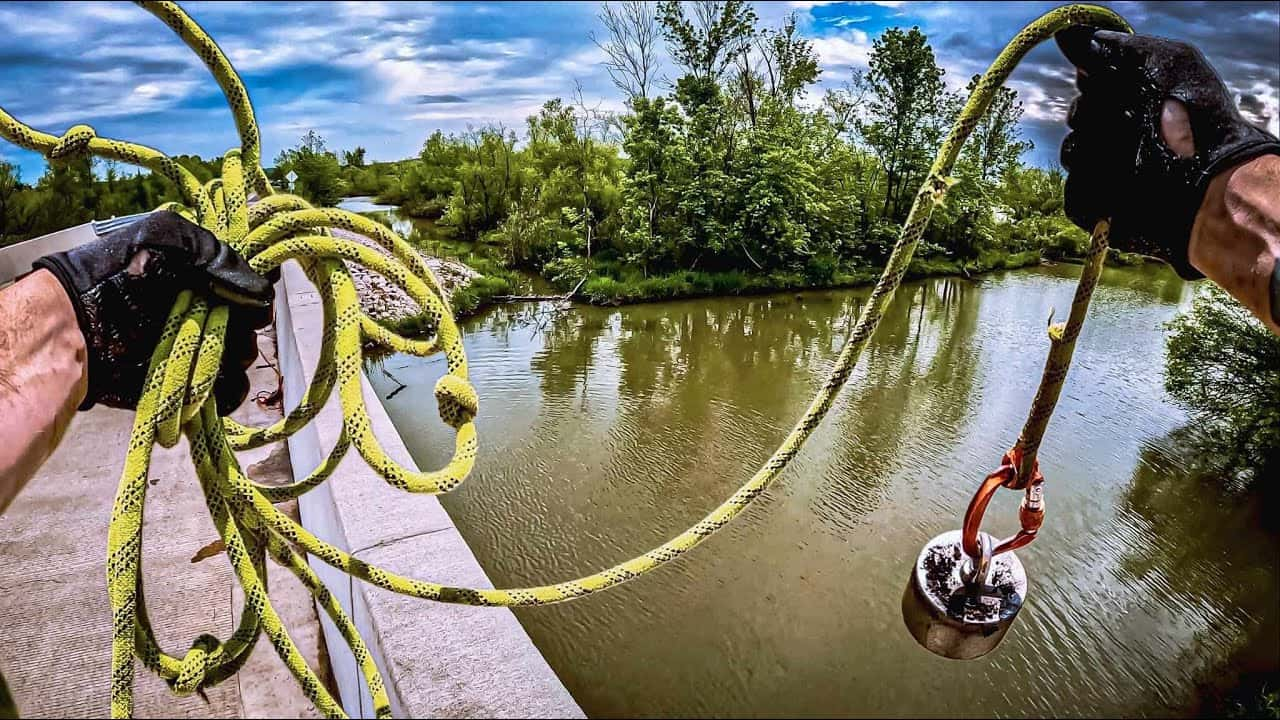
Primary magnet: 880-lb double-sided neodymium
- 3.5″ diameter
- Countersunk holes with M10 eye bolts
- Cost me $85 (worth every penny)
Rope: 65 feet of 8mm climbing rope
- 3,300-lb breaking strength
- Bright orange (easier to spot)
- About $40
Essential accessories:
- Thread locker (prevents eye bolt loosening)
- Cut-resistant gloves
- Grappling hook (for unsticking magnets)
Total investment? Under $150.
This setup has pulled up everything from vintage motorcycles to WWII relics.
Common Magnet Types (Ranked)
Let me break down your options:
1. 360-Degree Magnets (Best Overall)
These cylindrical magnets grab from any angle. Pricey but incredibly effective.
Pros:
- Maximum catching potential
- Rarely get stuck flat against surfaces
- Work great in current
Cons:
- 30-50% more expensive
- Heavier than comparable double-sided
2. Double-Sided Cup Magnets (Best Value)
My go-to recommendation for most people.
Pros:
- Great strength-to-price ratio
- Versatile for different techniques
- Widely available
Cons:
- Can flip if not heavy enough
- Two attachment points to check
3. Single-Sided Magnets (Budget Option)
Fine for testing the waters. Not ideal long-term.
Pros:
- Cheapest option
- All magnetic force on one side
- Lighter weight
Cons:
- Miss items when flipped
- Limited throwing techniques
4. Clamp-Style Magnets (Skip These)
Some magnets use a clamping mechanism. They seem clever but fail in practice.
The moving parts get jammed with debris. Hard pass.
Size Matters (But Not How You Think)
Bigger isn’t always better.
A compact 500-lb magnet often outperforms a massive 300-lb one.
Pourquoi ?
Magnetic force concentration.
Quality magnets pack serious power into smaller packages. My favorite 880-lb magnet is only 3.5 inches across.
Meanwhile, I’ve seen 4-inch magnets rated at just 400 lbs.
The lesson? Check dimensions AND strength ratings.
Coating and Corrosion Resistance
Your magnet will live a hard life.
Constant water exposure. Impacts. Scraping against concrete.
Look for these protective features:
- Triple-layer coating (Ni-Cu-Ni is standard)
- Sealed edges where magnet meets casing
- Stainless steel components
- Rubber bumpers (on premium models)
Even with protection, always dry your magnet after use. A quick wipe prevents long-term corrosion.
Where to Buy (And Where Not To)
I’ve bought magnets from everywhere. Here’s what I’ve learned:
Best sources:
- Specialized magnet fishing retailers
- Industrial magnet suppliers like OsencMag
- Amazon (but check reviews carefully)
Avoid:
- Random eBay sellers
- Wish/AliExpress (quality varies wildly)
- Hardware stores (overpriced, limited selection)
Expect to pay $60-120 for a quality magnet. Anything under $40 is likely junk.
Safety Considerations
Strong magnets demand respect.
I’ve seen fingers crushed between magnets. Electronics wiped clean. Even pacemaker warnings are real.
Essential safety rules:
- Keep magnets 12+ inches from electronics
- Never let two strong magnets snap together
- Warn bystanders before throwing
- Use proper knots (not just any knot)
- Check local laws first
Some areas ban magnet fishing entirely. Others require permits. Do your homework.
Testing Your New Magnet
Got your magnet? Here’s how to test it:
The garage test:
- Find something metal and heavy (old brake rotor works great)
- Attach your rope properly
- Test lifting straight up
- Try pulling at angles
- Practice your release technique
This builds confidence before you hit the water.
First location tips:
- Start shallow (docks and piers)
- Avoid areas with underwater structures
- Morning = less crowded
- Tell someone where you’re going
Advanced Magnet Features
Once you’re hooked (pun intended), consider these upgrades:
LED lights: Some magnets include waterproof LEDs. Game-changer for murky water.
Quick-release mechanisms: Lets you swap magnets without retying knots.
Custom thread sizes: Match your region’s standard hardware.
GPS trackers: For those using extremely powerful magnets.
Maintenance That Matters
A well-maintained magnet lasts years.
After each trip:
- Rincer à l'eau douce
- Sécher complètement
- Check eye bolt tightness
- Apply thread locker if loose
- Store away from metal objects
Once monthly, give it a thorough inspection. Look for cracks, rust spots, or loose components.
Le bilan
What magnet for magnet fishing should you actually buy?
For 90% of people: A quality 800-1,200 lb double-sided neodymium magnet.
It’s strong enough for serious finds. Manageable when stuck. And won’t break the bank.
My specific recommendation? The 880-lb double-sided cup magnet I mentioned earlier. Three years of heavy use and still going strong.
Rappelez-vous :
- Neodymium only (no exceptions)
- Steel casing is mandatory
- Start with moderate strength
- Invest in quality rope too
- Practice safe handling always
Magnet fishing rewards patience and the right equipment. Get a proper magnet, learn the techniques, and you’ll be pulling up treasures in no time.
What magnet for magnet fishing works best depends on your goals. But now you know exactly what to look for.
Happy hunting!